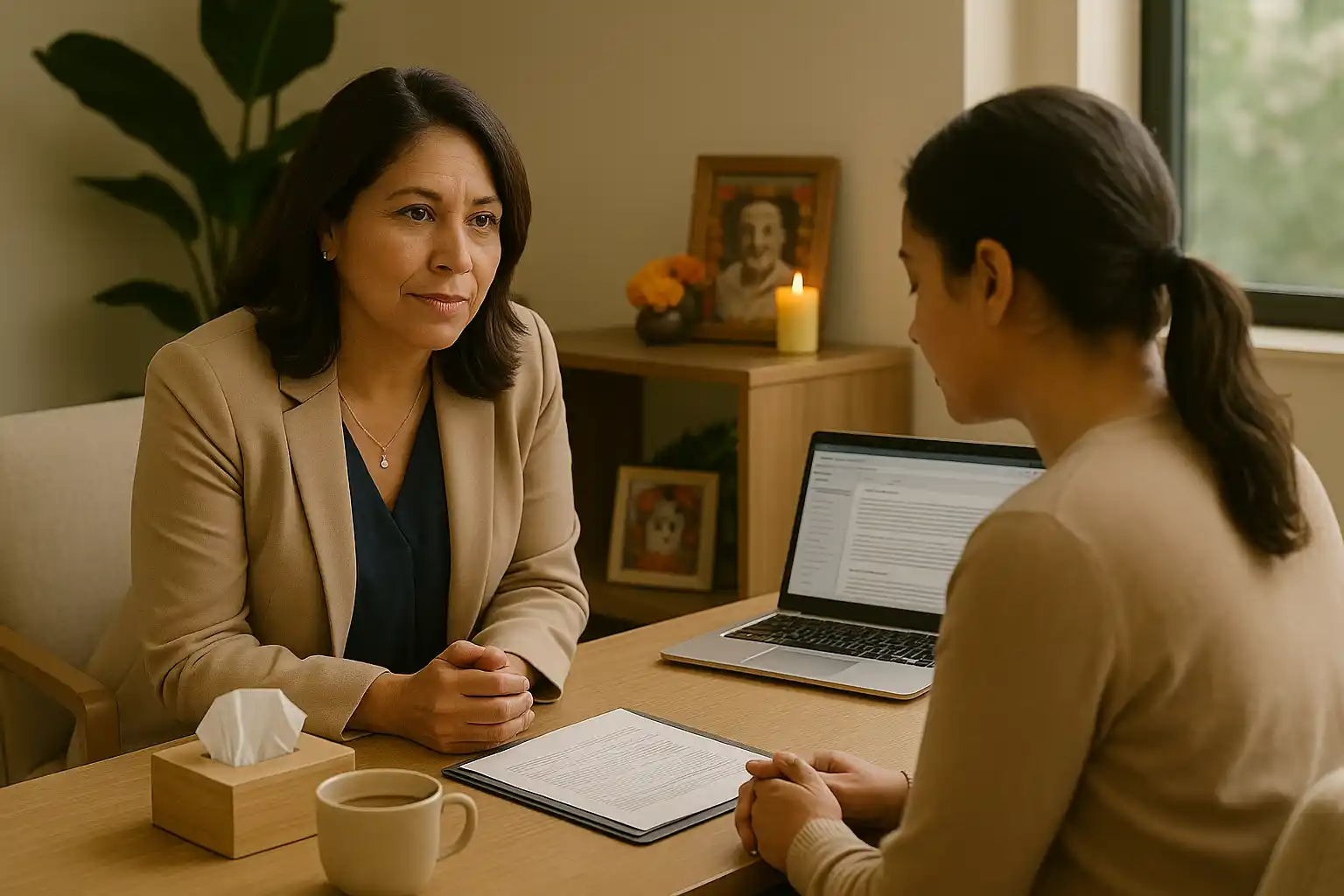
Why Estate Planning Matters More Than You Think, Regardless of Your Age

Most people put off estate planning, convinced it’s something only for the wealthy or elderly. The reality is far different—estate planning is for everyone. If you have children, assets (no matter how small), or even just social media accounts, having a plan in place can spare your loved ones stress, confusion, and financial strain.

About This Blog

Most people put off estate planning, convinced it’s something only for the wealthy or elderly. The reality is far different—estate planning is for everyone. If you have children, assets (no matter how small), or even just social media accounts, having a plan in place can spare your loved ones stress, confusion, and financial strain.

In a recent episode of The Digital Legacy Podcast, estate planning attorney and social media educator, Crista Hermance, Esq, broke down why planning ahead is one of the most responsible and compassionate things you can do. From understanding guardianship to navigating digital assets, she laid out practical steps that families—especially young parents—should take today to secure their futures.

The Uncomfortable Conversation We All Need to Have

Let’s face it: no one wants to think about their own mortality. Whether you’re a young parent juggling diapers and daycare or someone navigating the complexities of caring for aging parents while raising your own kids, estate planning probably isn’t at the top of your to-do list. But as Crista pointed out, not making these decisions doesn’t eliminate the need for them—it just means someone else (often the court system) will make them for you.

For parents, this is particularly crucial. Without an estate plan, the guardianship of your minor children could be decided by a judge, rather than someone you trust. If you don’t specify who should care for your child, the court will have to choose, and that may not align with your wishes.

Will vs. Trust: What’s the Difference?

Many people think writing a simple will is enough to ensure their assets go to the right people. However, wills must go through probate, a lengthy and often expensive court process. Instead, a living trust can help your estate bypass probate altogether, allowing for a smoother transition of assets.

A will outlines who will receive your property after you die, but it doesn’t provide much protection during your lifetime. A trust, on the other hand, not only designates who gets what but also enables someone you trust to manage your assets if you become incapacitated. This is particularly important for parents of minor children, as a trust ensures that funds are handled responsibly until the children are of a suitable age.

The Digital Legacy: What Happens to Your Online Life?

In today’s digital world, estate planning isn’t just about physical assets. Have you thought about what happens to your social media accounts, email, or even cryptocurrency when you pass away? Many platforms have policies for memorializing or deleting accounts, but if you don’t specify your wishes, your family may face unnecessary challenges in accessing or closing them.

To safeguard your digital legacy, consider creating a digital estate plan, which includes listing all your online accounts, passwords (secured in a legal way), and specifying what should happen to them. Appointing a digital executor can ensure your wishes are honored.

The Sandwich Generation: Caring for Parents While Raising Kids

Another growing challenge is the sandwich generation—adults who are caring for both their young children and their aging parents. This dual responsibility can be emotionally and financially overwhelming. Having an estate plan that includes healthcare directives, financial power of attorney, and a strategy for long-term care can alleviate some of this burden.

Many people assume that their parents have things figured out, but that’s not always the case. Having open conversations and ensuring your parents have the necessary legal documents in place can prevent a crisis later on. As Crista pointed out, waiting until a medical emergency to put these documents together only adds to the stress.

Common Estate Planning Myths—Debunked

  1. “I don’t have enough assets to need an estate plan.”

    • Estate planning isn’t just about money. It’s about control, guardianship, and making things easier for your loved ones.

  2. “I can just name beneficiaries on my accounts and avoid probate.”

    • While naming beneficiaries is helpful, it doesn’t account for all situations, such as incapacitation or unforeseen legal battles over assets.

  3. “I’m young and healthy. I don’t need to worry about this yet.”

    • Unfortunately, accidents and illnesses can happen at any age. Estate planning isn’t just for the elderly; it’s for anyone who wants to protect their family.

Getting Started: What You Can Do Today

Feeling overwhelmed? You’re not alone. But getting started is easier than you think. Here are a few practical steps:

  • Draft a will or trust. If you have children, name a guardian.

  • Create a durable power of attorney and healthcare directive. These documents allow a trusted person to make financial and medical decisions for you if you become incapacitated.

  • Review your beneficiaries. Ensure that your life insurance, retirement accounts, and other assets are properly designated.

  • Make a digital estate plan. List your online accounts, passwords (stored securely), and specify what should happen to them.

  • Talk to your family. Having open conversations can prevent confusion and conflict later on.

Final Thoughts: Planning for Peace of Mind

Estate planning is one of the greatest gifts you can give your loved ones. It’s not just about protecting assets—it’s about providing clarity, security, and peace of mind. Whether you’re a young parent, part of the sandwich generation, or simply someone who wants to avoid unnecessary legal complications, taking action now is key.

To learn more about estate planning and how it can safeguard your family’s future, be sure to watch the full conversation with Crista Hermance on YouTube. You can also check out her resources and educational content at EstatePlanningMom.com for more guidance on where to start.

Don’t wait until it’s too late—start planning your legacy today.


If something happened to you, would the people in your life know what to do? Don't leave your loved ones in the dark. Start developing your end-of-life and digital legacy plan. Download the My Final Playbook App on the App Store or Google Play or visit us online at Final-Playbook.Passion.io  to get started. With My Final Playbook, you'll be able to start and learn how to organize your legal, financial, physical, and digital assets today. Until then, keep your password safe and your playbook up to date. 


Related Blog

Duis mi velit, auctor vitae leo a, luctus congue dolor. Nullam at velit quis tortor malesuada ultrices vitae vitae lacus. Curabitur tortor purus, tempor in dignissim eget, convallis in lorem.

Finding Humanity at the End of Life: The Power of Prison Hospices

When we think about end-of-life care, we usually picture a quiet hospital room or a comfortable bed at home. We rarely imagine the sterile, restricted walls of a prison. Yet, aging and dying are universal human experiences that do not stop at the prison gates. Facing the end of life is emotionally heavy for anyone, but doing so while incarcerated adds layers of isolation and fear. In the midst of this incredibly challenging environment, a remarkable movement of compassion is taking root. I recently sat down with Fernando Murillo on the Digital Legacy Podcast to discuss a truly profound approach to end-of-life care. Fernando works with the Humane Prison Hospice Project, an organization bringing dignity to some of the most medically fragile individuals in our society . A Journey of Transformation Fernando’s connection to this work is deeply personal. He entered the prison system at the young age of 16 and ultimately served 24 years . After 19 years of incarceration, he was surprised to discover a licensed hospice within the California Medical Facility. He was recruited to work in the hospice, and despite initially saying no twice out of fear of being unprepared, he eventually answered the call . He wanted to offer himself as a resource to patients navigating their final days and humanize them in a difficult setting. Fernando quickly realized that the crimes these patients had committed were the least interesting things about them. By treating them with basic human dignity, he helped them open up and find peace without the fear of judgment . The Growing Need for Care We are facing an unprecedented aging crisis within the carceral system. Currently, one in five people incarcerated in the United States is 50 years or older. Due to harsh sentencing laws, many people are essentially serving sentences that will last for the rest of their lives. This reality creates a massive need for palliative care, memory care, and compassionate end-of-life support. Often, unofficial caregiving naturally occurs in these spaces as individuals step up to help their neighbors. They assist with essential daily tasks, such as moving a peer from a bed to a wheelchair or helping them to the shower.

Navigating the Digital Afterlife: How AI Is Reshaping Grief and Why Digital Resilience Matters Now

Most of us avoid thinking about the end-of-life. It feels heavy, and we are already carrying enough between aging parents, kids, careers, and our own daily survival. But here is the truth I keep coming back to: leaving your digital footprint to chance is no longer safe. We are the first generation that will die with more digital assets than physical ones. Thousands of photos in the cloud. Banking. Subscriptions. Social media. Decades of digital identity. None of it disappears when we do. Building digital resilience is no longer optional. It is a core act of care for the people we love. I recently sat down with Dr. Gina Cui on the Digital Legacy Podcast to dig into exactly this. Dr. Cui is an Assistant Professor of Marketing at Coastal Carolina University, and her academic work focuses on consumer behavior in digital spaces and AI. What she shared changed how I think about digital resilience, and I want to walk you through it. The Death Tech Industry Is Already a Billion-Dollar Market Death Tech is no longer a ‘niche’ market. Companies are actively building business models that profit from one of the most vulnerable emotional states a human can experience: the loss of someone we love. Dr. Cui breaks digital immortality into two distinct categories. Archival AI uses your existing photos, videos, and memories to help loved ones revisit the past. Think of it as an interactive scrapbook. Generative AI is different. It uses large language models to simulate a digital clone of someone who has passed away. It generates new responses. It carries on conversations. It feels, to the grieving family, like the person never left. These are very different products, and they raise very different ethical questions for your digital legacy. When Social Media Outlives the Living In December 2025, Meta secured a patent that allows their AI to simulate deceased users. A digital version of your loved one could continue to like, share, and comment on social posts long after they are physically gone. This is uncharted ground. Experts now predict that by 2037, there will be more ‘ghost’ of dead users Meta accounts than living ones. Pause on that. The platform will become a digital cemetery with active simulated residents. This forces a hard question: who actually owns your data, and who decides what happens to your digital identity after you die? The Double-Edged Sword of Grief Bots Some of this technology produces genuinely beautiful moments. Dr. Cui pointed me to the South Korean documentary "Missing You," produced in collaboration with Story File. In it, immersive virtual reality allowed a grieving mother to "hug" her late seven-year-old daughter one last time. It was a profound moment of healing. There is also early research suggesting upside. A study published in Nature, with a small sample of ten participants, found that interacting with AI grief bots can temporarily relieve the emotional burden grieving people place on friends and family. It gives sorrow somewhere to go. But commercializing grief introduces serious ethical problems. Most digital afterlife services run on subscriptions. What happens when the family can no longer afford the monthly fee? Cancelling the subscription does not feel like ending a service. It feels like losing the person all over again. A second death. Internal vs External Continuation Bonds Here is where Dr. Cui's framework gets really useful. In psychology, we talk about "continuation bonds." These are the ways the living stay connected to the people they have lost. An internal continuation bond is the natural human experience of feeling someone's presence after they are gone. You walk through the door and almost call out their name. You see their handwriting on a note and feel them in the room. The bond lives inside you. An external continuation bond is what new technology is creating. Now you can actually talk to a digital version of the deceased. They respond. They carry on conversations. The bond lives outside of you, on a server, inside a subscription, packaged as a product. This shift matters. We do not yet know what external continuation bonds do to long-term grief, mental health, or healing. We are running this experiment in real time, on real grieving families, without guardrails. Building digital resilience means making conscious choices about which bonds you want to leave behind, and which you do not.

When You Leave the Office, Does Your "Digital Self" Stay Behind?

You have spent years building your career. You have attended countless meetings, written thousands of emails, and maybe even recorded training videos for your team. You have poured your knowledge, your voice, and your personality into your work. But have you ever stopped to wonder what happens to all of that digital "you" after you leave a job or even after you pass away? It is a question that feels like science fiction, but it is rapidly becoming our reality. I recently spoke with Malvika Jethmalani, a human resources expert and the founder of Atvis Group, on the Digital Legacy Podcast. We explored a topic that sits at the uncomfortable intersection of technology, employment, and grief: the rise of the digital employee . From Human to "Humic" Malvika shared a fascinating concept called "humics." These are the uniquely human traits that machines cannot replicate: creative thinking, critical thinking, and social authenticity . Think about it. An AI can write a report, but can it sense the tension in a room and crack a joke to lighten the mood? Can it ethically challenge a decision that feels wrong? Can it form a genuine bond with a grieving colleague ? As AI becomes more integrated into our workplaces, our value as humans will not come from being faster or smarter than the machines. It will come from being more human . The Rise of the Corporate Avatar Here is where things get tricky. Companies are increasingly using AI to create digital avatars or "personas" of their employees. Imagine you record a series of training videos. Your company could use AI to take your voice and likeness and create new videos long after you have moved on to a new job . Or consider this: Gartner predicts that by next year, 70% of new employment contracts will include clauses about AI representations of your persona. This raises huge questions. Who owns your digital twin? If your avatar is used to train your replacement, should you get paid? What if your digital self says something you would never say ?

Comments