
Returning to the Earth: How "Modern" Death Care Can Heal Your Grief
When we think about death in the modern age, we often picture sterile rooms, stainless steel tables, and a process that happens entirely behind closed doors. For decades, we have been taught that caring for the dead is a job strictly for professionals. We hand over our loved ones almost immediately after they pass. This often creates a strange disconnect between the person we loved and the body we are seeing in a casket. But what if the most "modern" way to handle death was actually a return to the old ways? What if true healing comes not from stepping away, but from stepping in? In a recent conversation with Melissa Meadow, known as "The Modern Mortician," we explored how death care is evolving by looking backward. Her philosophy is simple yet radical. She wants to give people permission to participate in the care of their loved ones again.
About This Blog
When we think about death in the modern age, we often picture sterile rooms, stainless steel tables, and a process that happens entirely behind closed doors.
For decades, we have been taught that caring for the dead is a job strictly for professionals.
We hand over our loved ones almost immediately after they pass. This often creates a strange disconnect between the person we loved and the body we are seeing in a casket.
But what if the most "modern" way to handle death was actually a return to the old ways?
What if true healing comes not from stepping away, but from stepping in?
In a recent conversation with Melissa Meadow, known as "The Modern Mortician," we explored how death care is evolving by looking backward.
Her philosophy is simple yet radical. She wants to give people permission to participate in the care of their loved ones again.
Redefining What It Means to be a Mortician
The title "mortician" usually conjures images of somber suits and sales pitches.
Melissa challenges this by putting a spin on the industry that focuses on empowerment rather than commerce.
She explains that for centuries, death happened in the home.
Families washed their own dead, dressed them, and held vigils in their parlors .
It was only later that death was moved out of the house and into the funeral home. This shift turned the "parlor" into what we now call the "living room".
By reclaiming these practices, we are not being backward. We are engaging in the most modern approach possible by taking control of our grief and our choices .
The Truth About Embalming
One of the biggest barriers to a natural farewell is the misconception that embalming is required by law.
Melissa provided a fascinating look at the history of this practice.
Embalming really became prevalent in the United States during the Civil War as a way to transport fallen soldiers home to their families.
It was popularized further when President Abraham Lincoln was taken on a multi-state tour after his death, requiring repeated embalming to preserve his appearance.
However, the chemicals used in this process, originally arsenic and now typically formaldehyde, are toxic and carcinogenic to the workers who handle them.
Melissa points out that bodies do not require these chemicals for safety as simple refrigeration is often enough .
Unless you are planning a public viewing over several days or transporting a body across state lines, you often have the right to say no to this invasive procedure.
What is a Green Burial?
If we strip away the chemicals, the heavy metal caskets, and the concrete vaults, we are left with something beautiful called green burial.
This method allows the body to return to the earth naturally.
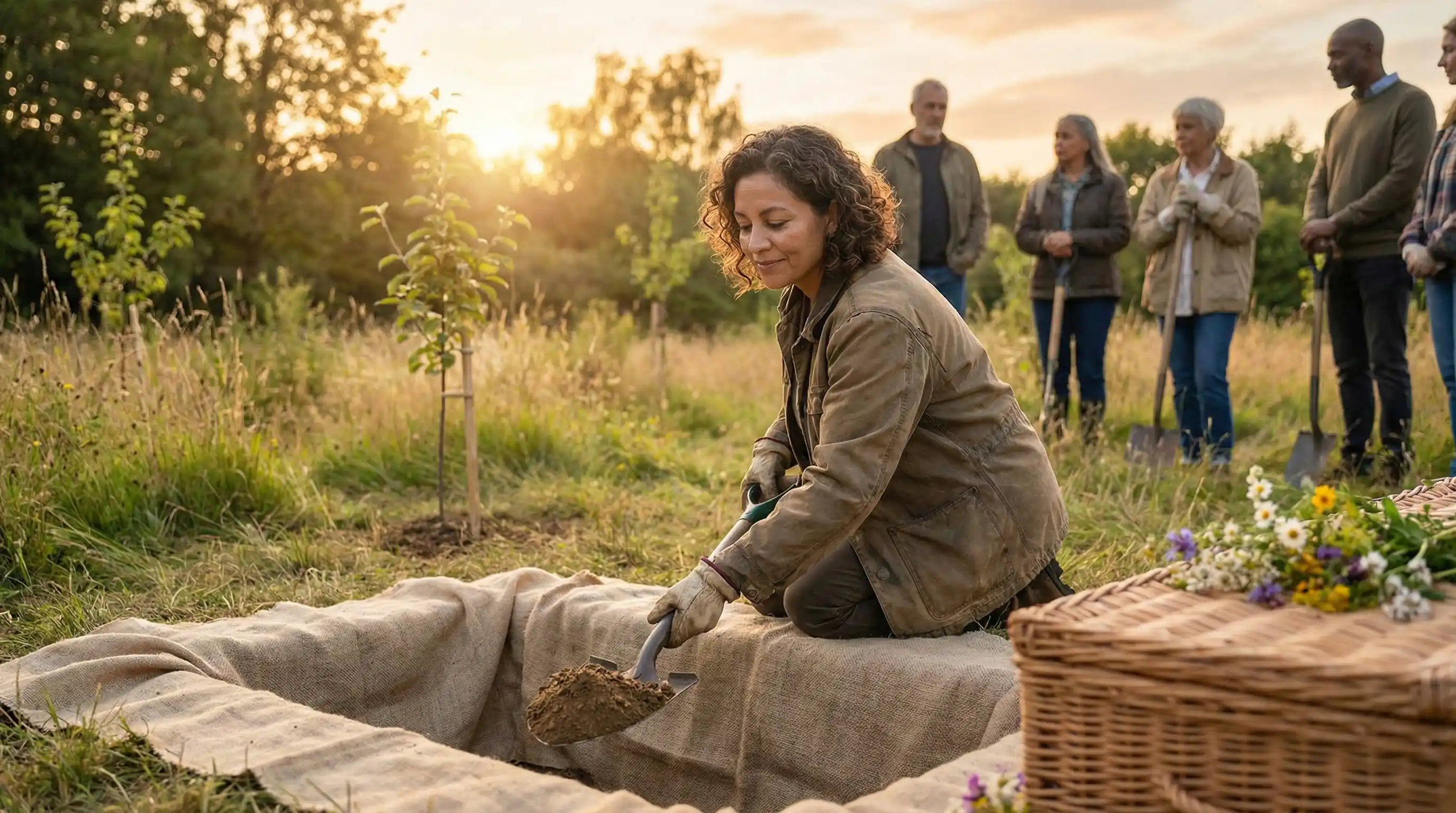
In a green burial, the body is placed in a biodegradable container, such as a simple pine box, a wicker casket, or a shroud made of natural fibers like cotton or silk .
Melissa notes that these burials take place at a depth of about three to three-and-a-half feet.
This shallow depth is crucial because it is where the soil is most active with microbes. This allows for a natural and efficient return to nature.
This option is not just environmentally friendly. It is often far more affordable.
A traditional funeral with embalming, a casket, and a vault can cost between $8,000 and $15,000.
In contrast, a green burial often costs less than $5,000 because it eliminates many of the expensive products and services associated with the conventional industry .
The Healing Power of Getting Your Hands Dirty
Perhaps the most profound aspect of natural death care is the opportunity for family participation.
In a conventional funeral, we often sit in chairs while strangers handle the burial.
In a green burial, families can be invited to help carry their loved one, lower them into the grave, and even fill the grave with soil .
Melissa shared a touching observation about the emotional impact of this physical work.
She often sees family members who are initially skeptical, sometimes describing the idea as "hippie-dippy," become the most engaged participants.
She recalled handing a shovel to a man who was unsure about the process.
He proceeded to shovel the earth onto his loved one’s grave, finding it to be a deeply cathartic and healing experience .
Moving your body and physically participating in the burial helps the mind process the reality of the loss.
It bridges the gap between the clinical reality of death and the emotional need for closure.
Protecting Your Final Wishes
Knowing these options exist is the first step, but ensuring your wishes are followed is the second.
Family dynamics can be complicated, and grief can make decision-making difficult.
Melissa warns that without a clear plan, your wishes for a green burial or a simple farewell could be overridden by family members who may opt for a different, perhaps more expensive, path.
She has seen instances where families pocketed the difference in cost or ignored the deceased's request for a natural burial in favor of cremation or traditional embalming.
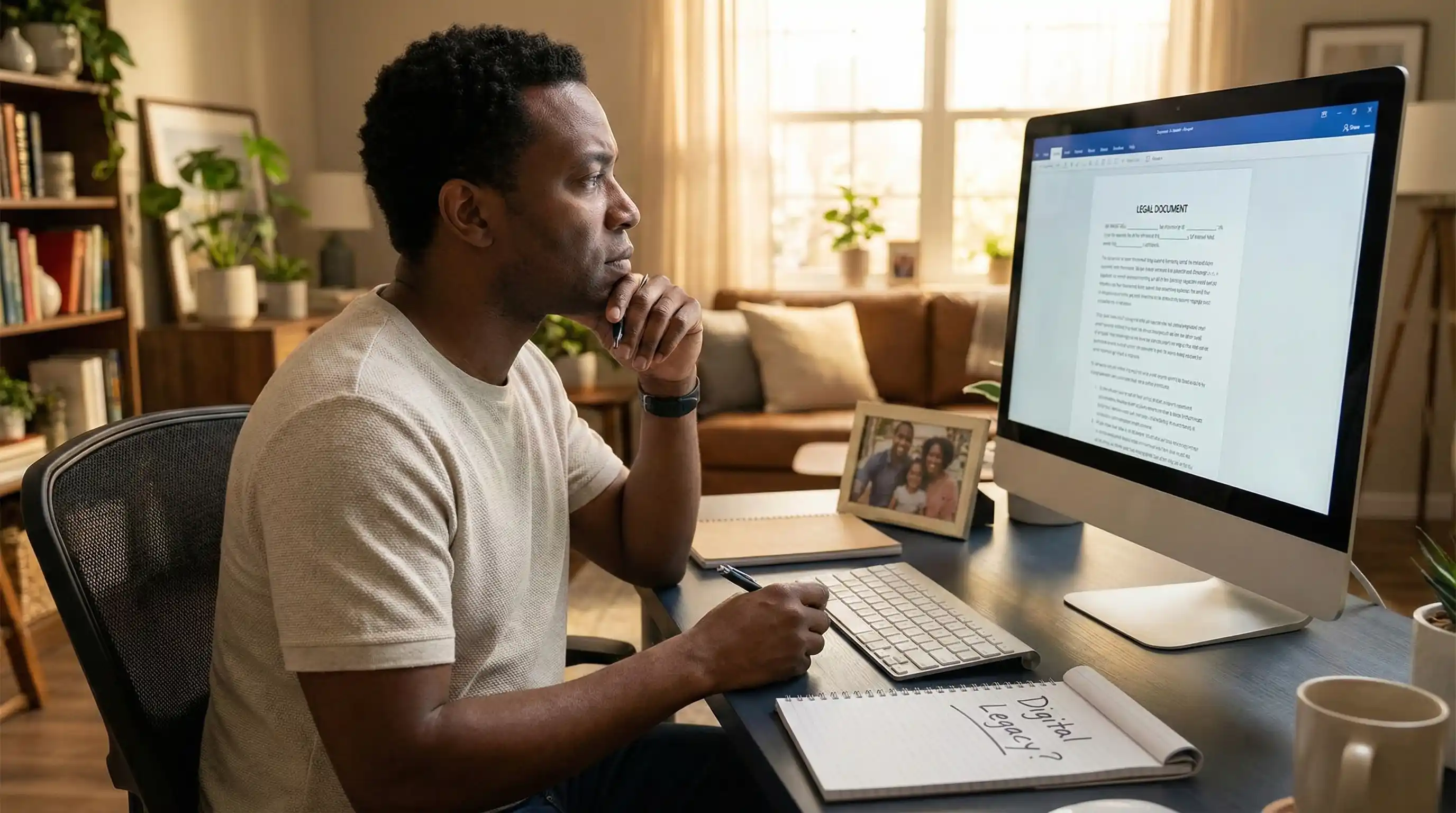
The best way to protect yourself is to put your wishes in writing.
Melissa recommends finding the "Appointed Agent" form for your specific state .
This legal document allows you to designate a specific person to be in charge of your body after you die. This supersedes the automatic rights of your next of kin .
If you know your family might struggle with your choice for a natural burial, appointing a trusted friend or partner as your agent ensures your voice is heard even when you are no longer there to speak .
This Is Not Just About Death. It Is About Life.
Choosing a natural approach to death is not just about the environment or saving money.
It is about recognizing that our bodies are part of a larger cycle.
Melissa envisions a future where conservation burial grounds protect land near national parks to preserve nature for wildlife while providing a resting place for us .
It is a way to leave a legacy of life, even in death.
Whether you choose water cremation, a green burial, or simply a home vigil, the goal is to make the experience authentic to you.
A Gentle Place to Begin
If you are a caregiver, a patient, or simply someone planning ahead, start by getting curious about what is available in your area.
Visit The Modern Mortician online to find resources specific to your state.
Look up the "Appointed Agent" form for your location and think about who you trust to carry out your wishes .
You do not have to do it all today. Just opening the conversation is a powerful act of love.
🎧 To hear Melissa Meadow's full conversation with Niki Weiss, watch the episode on The Digital Legacy Podcast. 🌐 Explore more resources at themodernmortician.com
Take the Next Step: Start Planning with My Final Playbook


Related Blog
Duis mi velit, auctor vitae leo a, luctus congue dolor. Nullam at velit quis tortor malesuada ultrices vitae vitae lacus. Curabitur tortor purus, tempor in dignissim eget, convallis in lorem.

Comments