Redefining Dignity: How Virtual Autopsy is Revolutionizing how we investigate death.

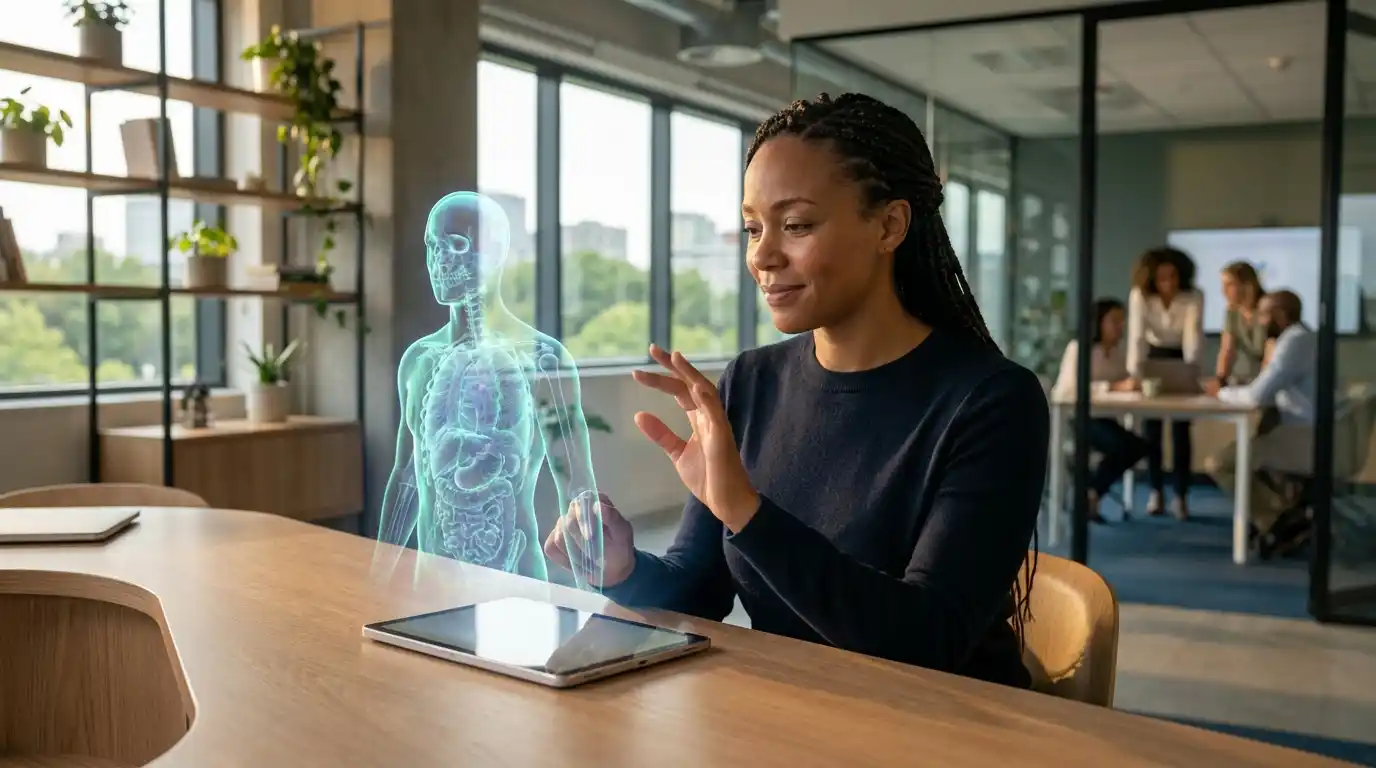
The reality of death is a universal truth, yet our approach to it, particularly after a sudden or unexpected loss, often remains shrouded in traditional, and sometimes invasive, practices. For many families facing the unimaginable grief of losing a loved one, the concept of an autopsy adds another layer of distress, raising concerns about the sanctity and integrity of the departed. But what if there was another way? What if technology could offer a path to understanding without violating deeply held beliefs or adding to a family's emotional burden? This compelling question formed the heart of a recent conversation between Niki Weiss on the Digital Legacy Podcast and Ash Govind, CoFounder of Virtual Autopsy UK. The Inception of a Humanitarian Innovation Ash’s journey into the world of virtual autopsies began over a decade ago, a meeting of minds with a leading forensic pathologist. Their shared observation was stark: the practice of autopsy, for all its scientific necessity, had largely resisted modernization. It still largely revolved around the "desecration and dissection of human remains," a harsh reality for grieving families. This sparked a crucial question: Could technology replace the scalpel with innovation? Ash explained that the instrument needing an upgrade was essentially the scalpel itself. Inspired by the rapid evolution of technology in other areas of life, from wired telephones to powerful smartphones, they envisioned a way to "Xerox the deceased" using advanced CT scanning. This process would generate comprehensive data, allowing for a 3D reconstruction of the remains for analysis, all without invasive procedures.
About This Blog

The reality of death is a universal truth, yet our approach to it, particularly after a sudden or unexpected loss, often remains shrouded in traditional, and sometimes invasive, practices. For many families facing the unimaginable grief of losing a loved one, the concept of an autopsy adds another layer of distress, raising concerns about the sanctity and integrity of the departed.

But what if there was another way? What if technology could offer a path to understanding without violating deeply held beliefs or adding to a family's emotional burden? This compelling question formed the heart of a recent conversation between Niki Weiss on the Digital Legacy Podcast and Ash Govind, CoFounder of Virtual Autopsy UK


The Inception of a Humanitarian Innovation

Ash’s journey into the world of virtual autopsies began over a decade ago, a meeting of minds with a leading forensic pathologist. Their shared observation was stark: the practice of autopsy, for all its scientific necessity, had largely resisted modernization. It still largely revolved around the "desecration and dissection of human remains," a harsh reality for grieving families. This sparked a crucial question: Could technology replace the scalpel with innovation?

Ash explained that the instrument needing an upgrade was essentially the scalpel itself. Inspired by the rapid evolution of technology in other areas of life, from wired telephones to powerful smartphones, they envisioned a way to "Xerox the deceased" using advanced CT scanning. This process would generate comprehensive data, allowing for a 3D reconstruction of the remains for analysis, all without invasive procedures.


Beyond Science: A Human-Centric Approach

While the scientific benefits of this non-invasive approach are clear, Ash emphasized that the innovation was driven by a more humanitarian purpose. He highlighted a critical aspect often overlooked: the profound distress and sometimes religious objections many families have to traditional autopsies.

For faiths like Islam and Judaism, interfering with the deceased after death is prohibited, and burial must occur as quickly as possible. Virtual autopsy addresses this directly. By rapidly scanning the deceased, a probable cause of death can be determined and reported swiftly, allowing families to proceed with burial in accordance with their religious observations. This consideration showcases a deeply respectful and human-centric design philosophy.


The Trauma of the Unexpected

Ash underscored the emotional landscape surrounding sudden deaths. He noted that autopsies are typically required for deaths that are "unnaturally, unexpectedly, suddenly, and suspiciously" occurred. Each of these circumstances carries an inherent element of trauma. It's not the anticipated passing of an elderly loved one, but an unforeseen loss that plunges families into psychological distress.

In these sensitive situations, the invasiveness of a traditional autopsy can compound grief. Ash, drawing from 35 years in the funeral sector, spoke candidly about the challenges funeral directors face in preparing remains after an autopsy. He described the "Y incision" or "I incision" on the torso, and the cranial opening to access the brain, explaining how these procedures, while necessary for traditional examination, can be deeply distressing for families who wish to view their loved one in an intact state. 

These visible incisions can leave an "emotional scar and trauma" on families, impacting their lasting memories. Virtual autopsy, by eliminating these incisions, offers a more dignified and less intrusive option.


Overcoming Resistance and Turbocharging Technology

Niki rightly pointed out that CT scans and MRI machines have been around for decades, prompting the question of why this innovative approach hadn't gained wider traction sooner. Ash clarified that while post-mortem CT (PMCT) has existed in a "relatively primitive state" for some time, it lacked the "definition, usability, and functionality" that Virtual Autopsy UK has developed. Their team has turbocharged the technology over the last decade, making it truly fit for purpose within forensic medicine.

He gave immense credit to institutions that previously explored this area, acknowledging that "every step makes it better for the deceased." The goal was to reach a standard where forensic pathologists and radiologists could confidently say, "actually it's fit for purpose. It does the job."


The Power of AI: Assistance, Not Replacement

The conversation naturally turned to the accelerating advancements in artificial intelligence. Ash, while cautious, outlined how AI is beginning to assist in virtual autopsies. He emphasized a principle of responsible use: AI is there to help "validate instincts, findings, and what you see," not to replace the expert human element.

For instance, AI can flag anomalies in 3D images, guiding radiologists more efficiently through the vast amounts of data. This is achieved through the AI's learning from "hundreds and hundreds of thousands of datasets." Similarly, AI can assist pathologists in compiling reports by learning their terminology and style, significantly speeding up the process. However, Ash firmly stated that "the responsibility will always stay with the forensic pathologist." AI serves as an "acid test," making the process more efficient without fostering laziness.


A Movement for Change

Ash concluded with a powerful call to action: "We need people to create change.” He believes that raising awareness about the existence of virtual autopsy technology is paramount. Families facing the difficult decision of an autopsy should feel empowered to ask, "Is there an alternative? Is there something different out there that could be done?"

This is not a theoretical concept; the technology is well-tested, globally accepted, and its radiological evidence is admissible in courts of law. In the UK alone, nearly 15,000 cases per year are concluded using post-mortem imaging. This translates to 15,000 people, as far as I'm concerned, that we've saved from going through that anguish and trauma.

Virtual autopsy is more than just technological advancement, it represents a profound humanistic shift in end-of-life care. It offers dignity and respect in death, a gift that technology can truly provide.


Taking Action:

  • Educate Yourself: Learn more about virtual autopsy and its benefits. Knowledge empowers you to make informed decisions.

  • Advocate for Alternatives: If faced with the need for an autopsy for a loved one, inquire about less invasive options like virtual autopsy.

  • Share the Knowledge: Help spread awareness within your community about this innovative approach to post-mortem examination.


To learn more about this groundbreaking technology and its impact, visit Virtual Autopsy UK and listen to the full episode on the Digital Legacy Podcast.


Take the Next Step: Start Planning with My Final Playbook


Related Blog

Duis mi velit, auctor vitae leo a, luctus congue dolor. Nullam at velit quis tortor malesuada ultrices vitae vitae lacus. Curabitur tortor purus, tempor in dignissim eget, convallis in lorem.
The Silent Gift: Michelle Carter on Planning for Life's Final Chapter

Life, with all its beautiful unpredictability, often steers us away from contemplating its inevitable end. Yet, the wisdom shared by those who navigate these profound moments reminds us that engaging with end-of-life planning is not about dwelling on loss, but about cherishing life and protecting those we love. Michelle Carter, widely known as "The Death Expert," recently sat down with Niki Weiss on the Digital Legacy Podcast to illuminate this often-avoided subject. Her insights, drawn from generations of experience, offer a compassionate and practical approach to preparing for life’s final chapter. From Funeral Home to End-of-Life Coach: A Generational Journey Michelle Carter's journey into end-of-life care is not just professional, it's deeply personal and generational. As a third-generation funeral director, she witnessed firsthand the preventable distress families experienced during times of profound grief. Her grandfather, a World War II mortuary unit veteran, laid the foundation, passing the legacy to Michelle's father. While the family business eventually shifted, Michelle's calling remained. Driven by a desire to prevent families from making the same costly and emotionally draining mistakes, she transitioned from day-to-day funeral work to a groundbreaking new role: end-of-life coaching. This shift allowed her to address the core issues long before a crisis hits. Her company, aptly named The Death Expert, was born from a client's heartfelt recommendation.

Beyond Taboo: Finding Inspiration in the Conversation Around Death

he topic of death, often treated with apprehension and avoidance, is something we all face. It’s an inevitable part of life, and yet, our culture often struggles to engage with it openly. But what if embracing conversations about death could actually illuminate our lives and foster deeper connections? This was the heart of a recent empowering conversation on the Digital Legacy Podcast, where Niki Weiss welcomed Peri Rigler, a former marketing strategist who is now a passionate end-of-life death doula and community builder. Peri shares her unique journey and how she is working to reframe our perception of death, making it less scary and more meaningful. Peri’s path to the death care space was, in her own words, "not on my bingo card." For years, she navigated a fast-paced career in marketing and advertising in New York City. Yet, even in her twenties, a persistent "pang" or "ache" began to surface, a persistent inner voice questioning her vocational alignment. This voice, surprisingly, always pointed her toward the death space, a calling she initially found peculiar and difficult to articulate to others. A Calling to Compassion: From Marketing to Meaning Peri describes this pull as an insistent calling that grew stronger with time. It wasn't a morbid fascination but a profound desire to help people in intimate and meaningful ways during one of life's most challenging transitions. The question "What happened to you?" often came with an air of concern from friends and family, implying a negative, perhaps even obsessive, focus. However, for Peri, her focus on death is quite the opposite. She sees death through a lens that helps create a better life, not a gloomy one. Her drive is to assist others on their journey through loss and transition, framing it as a positive and essential part of the human experience. As she aptly put it, it's "the opposite of gloomy." Loosening the "Death Grip": A Brighter Approach Peri’s pivotal shift came during a period of professional transition in Colorado, which provided the mental space to truly listen to that persistent inner voice. She pursued and obtained her death doula certification through the International End of Life Doula Association. This led her to meaningful hospice volunteer work, where she realized the profound need for more open dialogue around death. She noticed people held a "death grip" on the topic, a firm resistance to discussing it. This insight, combined with her marketing background, sparked a creative idea: a podcast that could approach death in a relaxed, non-scary way. This is how "Mostly Death Stuff" was born. Her branding, with its bright yellow sweater and vibrant imagery, is intentionally designed to reflect this mission: to bring light and approachability to the death space. Death and Donuts: Building Community Through Shared Humanity Building on the success of her podcast, Peri felt a strong pull to create community. Recognizing the widespread ache for human connection in today's society, she developed the grassroots community "Death and Donuts". The name itself, she explains, is designed to evoke a smile, pairing two seemingly disparate things to lower the threshold of discomfort surrounding death. It’s about creating a safe space where people can come together face-to-face and virtually to engage in authentic conversations. She launched "Death and Donuts" with a simple Facebook post asking if anyone was interested in a community group that talked about death stuff in a light, bright way, a group that gave "permission to giggle every once in a while." To her surprise, 125 people immediately provided their emails. This overwhelming response signaled a deep, unmet need for such a space. Everyone Qualifies: Death as the Ultimate Unifier Peri emphasizes that "everyone qualifies" for Death and Donuts. Death is the ultimate unifier, a universal experience that transcends age, background, and belief. She envisions her community as another type of affinity group, akin to clubs for dog lovers or hikers. Her goal is to create an environment where everyone feels welcome, regardless of whether they are introverted or extroverted, curious or hesitant. Her events range from informative tours of eco-funeral homes to meetings with psychic mediums, and even simple gatherings at a donut shop to just "talk about death stuff." The surprising side effect, she notes, is that "a side effect of talking about death is actually a shinier life." These conversations, rather than being gloomy, often leave participants feeling a sense of upliftment and renewed appreciation for life.

Leaving A Music Legacy in the Digital Age

This week on Death and Dying in the Digital Age, we consider end-of-life care and the legacies we leave behind. Niki Weiss sat down with accomplished music therapists Brooke Carroll Lemchak, PhD and Karen Dennery Melita, MMT, MT-BC to explore how music therapy helps bridge the gap between life and death while creating lasting emotional connections that can be there for loved ones when you no longer are. Both Brooke and Karen bring extensive expertise to this conversation, having dedicated their careers to music therapy after completing rigorous academic and clinical training at Temple University. Their combined experience spans decades of working with hospice patients across all age groups, from young children to elderly adults. As board-certified music therapists, they've witnessed firsthand how music can transform end-of-life experiences and create meaningful legacies for those left behind. The Power of Musical Memory in End-of-Life Care Scientific research has shown that musical memories are stored in the prefrontal cortex, one of the last areas of the brain to deteriorate as we age. This explains why individuals with advanced dementia who struggle to recognize family members can still recall and sing along to songs from their youth with perfect clarity. For music therapists working in hospice settings, this connection becomes a powerful way to maintain meaningful relationships until the very end. Through carefully selected songs and musical interactions, patients can express emotions, share memories, and connect with loved ones even when traditional communication becomes difficult. The therapeutic value extends beyond the patient to family members, who often find comfort in seeing their loved ones engage with familiar music. You can create new positive memories that family members can cherish long after their loved one has passed, helping to balance the challenging emotions that come with loss. Creating Musical Time Capsules for Loved Ones In today's digital age, creating musical legacies has become more accessible than ever. Modern technology allows us to easily compile and preserve meaningful songs that represent our relationships with different people in our lives. Unlike physical recordings that can deteriorate over time, digital platforms ensure these musical memories remain intact for future generations and can be a preservation of your legacy. Music therapists encourage people to start building these musical time capsules while they're healthy, rather than waiting until they face a health crisis. This allows for thoughtful selection of songs that truly represent relationships and experiences, creating more meaningful collections for loved ones. The process of creating musical legacies can be therapeutic in itself, helping individuals process their emotions and reflect on important relationships in their lives. It becomes a way to express feelings that might be difficult to put into words, especially for those who struggle with verbal expression. The Impact of Original Songs Sometimes, existing songs aren't enough to express the complex emotions and messages we want to leave behind. Music therapists often work with patients to create original songs that address specific relationships or unresolved feelings. These personalized compositions become powerful tools for healing and closure as well as a personal record to share with future generations. One particularly moving example involved a patient with an estranged daughter. Through songwriting, he found a way to express his regrets and love in a way that traditional communication hadn't allowed. While the song's reception by his daughter remained uncertain, the process itself provided vital emotional release and closure for the patient. The creation of original music often serves multiple purposes: it helps patients process their own emotions, provides a creative outlet during difficult times, and leaves behind a unique, personal legacy for loved ones. These songs become time capsules of emotion, carrying messages of love and healing across generations. Technology's Role in Preserving Musical Legacies Here are several ways technology has revolutionized how we create and preserve musical legacies: 1. Digital Storage Platforms Cloud-based music libraries Dedicated playlist folders for different loved ones Backup systems to prevent loss 2. Recording Options Voice memo applications Professional-quality recording software Digital audio workstations 3. Sharing Capabilities Easy distribution to family members Ability to add personal notes to songs Options for future scheduled sharing Modern digital tools have transformed how music therapists work with patients and how individuals can create their own musical legacies. What once required extensive physical sheet music collections can now be accessed instantly through digital libraries. This accessibility allows for more spontaneous and responsive music therapy sessions while ensuring that created works remain preserved for future generations. Time to Start Your Legacy The time to start creating your musical legacy is now, not when facing end-of-life decisions. Begin by thinking about the special people in your life and the songs that remind you of them. Consider creating digital folders for each loved one, filling them with meaningful music that represents your relationship. Your musical legacy doesn't have to be complex or professionally produced. It can be as simple as a playlist of songs that tell your story or express your feelings. The key is to start the process while you have the clarity and time to make thoughtful choices about what you want to leave behind. Don't wait until tomorrow to begin creating these precious gifts for your loved ones. Whether through existing songs or original compositions, music provides a unique way to ensure your love and memories live on. In the end, these musical legacies become bridges across time, allowing your voice to continue speaking to future generations through the universal language of music. Don't leave any pieces of your legacy to chance. As a next step, you can start and develop your plan by downloading the app, My Final Playbook. Through this app, you'll be able to start and learn how to organize your legal, financial, physical, and digital assets today. In the digital age, planning your legacy is just a click away. Until then, keep your password safe and your playbook up to date.

Comments