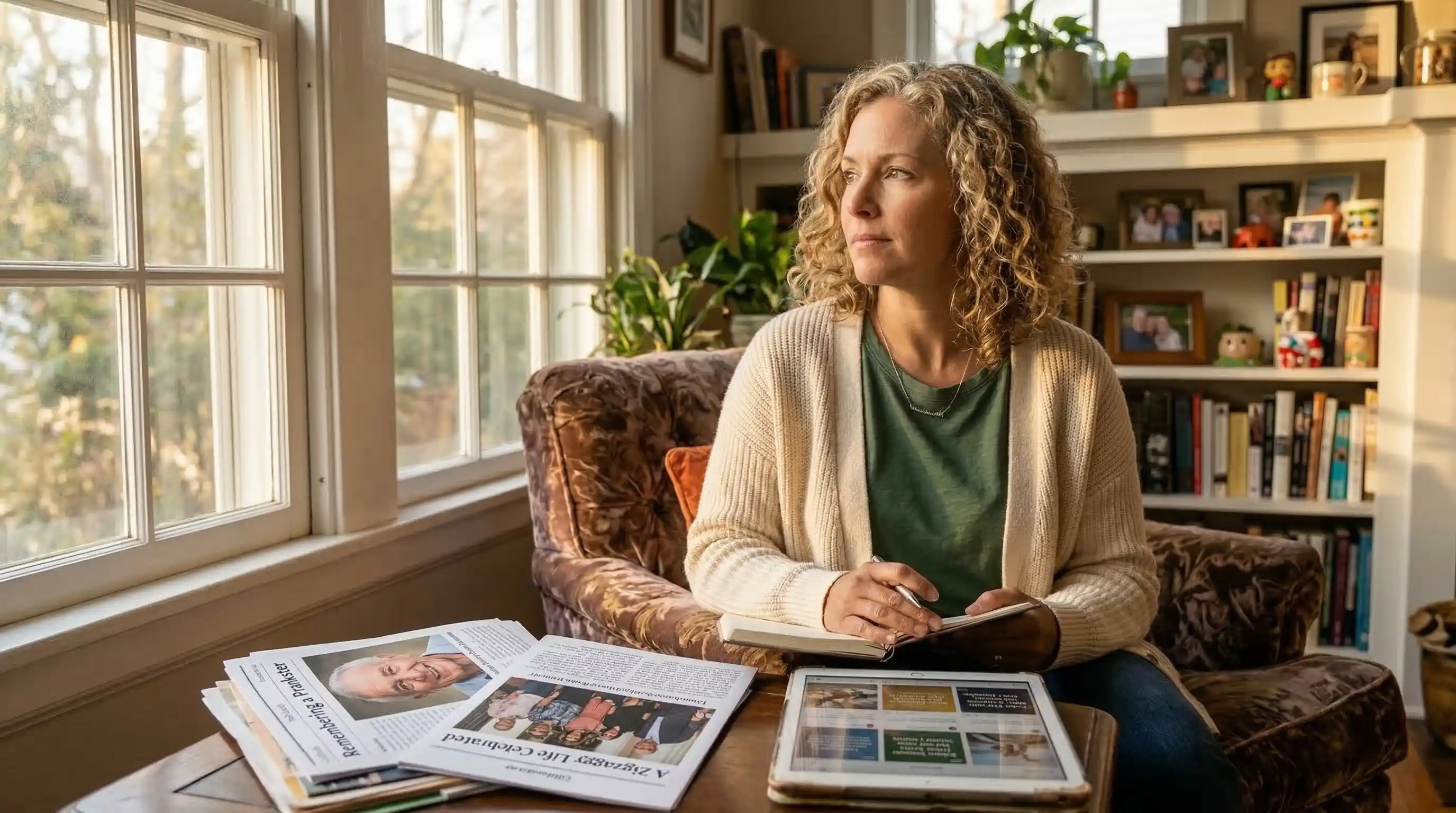
Capturing the Moments That Matter: How Kinnect is Redefining Legacy

It is an uncomfortable truth, but life is fragile and unpredictable. We often spend our days focused on the immediate future, rarely stopping to think about the legacy we are building right now. Yet, when a loved one receives a difficult diagnosis, or when we face our own mortality, our perspective shifts instantly. We realize that the most valuable things we leave behind are not just financial assets or legal documents, but our memories, our stories, and the essence of who we are. Recently, Niki Weiss sat down with Omar Alvarez on the Digital Legacy Podcast to explore this very human experience. Omar is the founder of Kinnect, a new platform designed to help families capture and preserve their stories in a safe, private space. His journey to creating Kinnect is deeply personal, born from a lifelong awareness of life's fleeting nature. A Mission Born from Love and Loss Omar’s dedication to preserving family history began when he was just a child in the fifth grade. His grandfather, a beloved figure who spent summers with his family, was diagnosed with dementia. Watching a vibrant, deeply admired family member slowly fade was a profoundly painful experience. At that young age, Omar realized that memories could be lost. He asked his parents if he, too, could develop dementia. When they honestly answered "yes," a powerful seed was planted. He felt an immediate, urgent need to start saving the pieces of his life. Years later, while building a successful career in marketing, Omar experienced another devastating loss. A close friend was diagnosed with terminal cancer and passed away at only 31 years old. This tragedy solidified his mission. He realized there was a massive lack of resources to help people intentionally capture their life stories while they are still here, and an equally massive lack of support for the friends and family left behind.
About This Blog

It is an uncomfortable truth, but life is fragile and unpredictable. We often spend our days focused on the immediate future, rarely stopping to think about the legacy we are building right now. Yet, when a loved one receives a difficult diagnosis, or when we face our own mortality, our perspective shifts instantly. We realize that the most valuable things we leave behind are not just financial assets or legal documents, but our memories, our stories, and the essence of who we are.

Recently, Niki Weiss sat down with Omar Alvarez on the Digital Legacy Podcast to explore this very human experience. Omar is the founder of Kinnect, a new platform designed to help families capture and preserve their stories in a safe, private space. His journey to creating Kinnect is deeply personal, born from a lifelong awareness of life's fleeting nature.


A Mission Born from Love and Loss

Omar’s dedication to preserving family history began when he was just a child in the fifth grade. His grandfather, a beloved figure who spent summers with his family, was diagnosed with dementia. Watching a vibrant, deeply admired family member slowly fade was a profoundly painful experience.

At that young age, Omar realized that memories could be lost. He asked his parents if he, too, could develop dementia. When they honestly answered "yes," a powerful seed was planted. He felt an immediate, urgent need to start saving the pieces of his life.

Years later, while building a successful career in marketing, Omar experienced another devastating loss. A close friend was diagnosed with terminal cancer and passed away at only 31 years old. This tragedy solidified his mission. He realized there was a massive lack of resources to help people intentionally capture their life stories while they are still here, and an equally massive lack of support for the friends and family left behind.


The Problem with Modern Memories

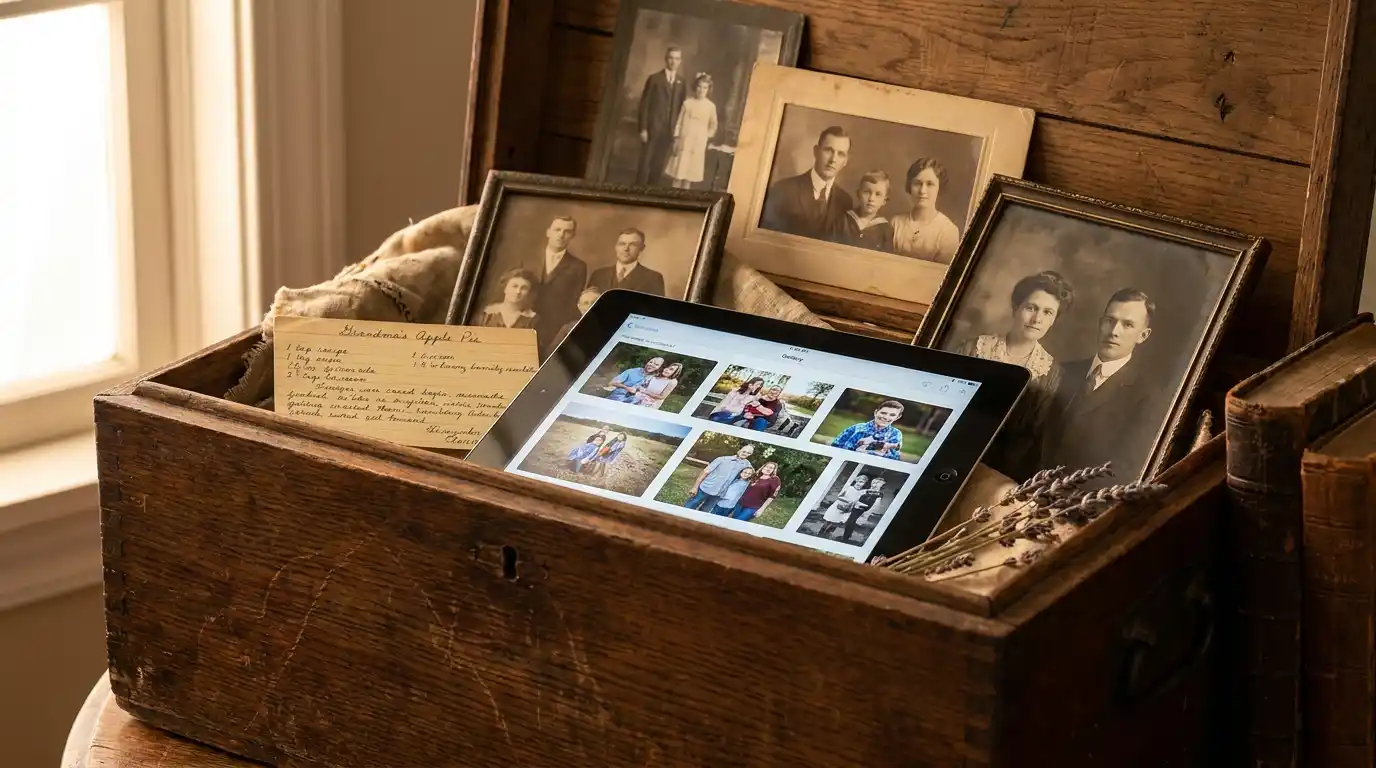
Today, the way we document our lives is highly fragmented. We have photos scattered across old hard drives, thoughts shared on public social media, and vital legal documents locked away in filing cabinets. We are the first generation to die with more digital assets than physical ones, yet we lack a centralized, meaningful way to pass those digital assets on.

Furthermore, traditional social media platforms are rarely designed for genuine family connection. They are built to capture our attention through algorithms and advertisements, not to preserve our most vulnerable reflections for our great-grandchildren.


A Private Space for Meaningful Connection

This is exactly why Omar built Kinnect. It is designed as an all-in-one hub for families to engage, reflect, and build a lasting legacy without the noise of traditional social media.

Privacy is the foundational core of the platform. There are no ads, no bots, and no public search bars. Users must be explicitly invited via a private URL to join a specific family group. This creates a safe, intimate environment where users feel comfortable being truly vulnerable and authentic.


How Kinnect Works: Daily Echoes and the Octopus Feature

Once inside a private group, Kinnect gently encourages connection. The platform uses a feature called "Echo" to send out one thoughtful question each day. These are not generic prompts; they are tailored to prompt meaningful reflection about your life, your history, and your values. Users can respond with text, voice, or video, essentially creating a long-form, interactive interview of their life over time.

Omar also recently introduced a feature internally called "Octopus." This tool acts as a gentle, utility-based check-in. It helps families stay organized and connected by asking task-based questions, like reminding you of a birthday or prompting a young adult to ask their mother about her favorite childhood songs. It seamlessly turns the simple act of checking in into the powerful act of archiving a family's history.


A Global Perspective on Legacy

When we think of legacy in the Western world, we often focus strictly on legal documents like wills and trusts. While Kinnect is partnering with estate planning companies to house those vital records, Omar recognizes that legacy means much more.

For many cultures globally, legacy is about the stories, the generations of family recipes, and the shared history that explains why a family is the way they are. Kinnect is designed to capture this holistic view of a life. It moves beyond the sterile dots on a traditional genealogy chart and fills the family tree with real voices, real insights, and real love.


Reflecting on Your Own Legacy

We cannot guarantee how long our digital platforms will survive, and we certainly cannot predict the length of our own lives. However, we can choose to be intentional about what we document today.

Omar encourages everyone to pause and define what legacy truly means to them. Consider taking these small steps to protect your story:

  • Identify Your Treasures: Decide what matters most. Is it a collection of family recipes, a journal of personal reflections, or ensuring your legal documents are accessible?

  • Consolidate Your Digital Footprint: Begin gathering your digital assets and consider how you want them managed. Tools like Kinnect offer a secure place to start housing these memories.

  • Embrace the Present: While planning for the future is vital, do not forget to appreciate the gift of being alive today. Finding joy in the present moment is the most beautiful legacy you can create.

To hear Omar Alvarez’s full conversation with Niki Weiss, listen to the latest episode of the Digital Legacy Podcast. You can explore the Kinnect platform and start building your family's archive at www.kinnect.club


Take the Next Step: Start Planning with My Final Playbook


Related Blog

Duis mi velit, auctor vitae leo a, luctus congue dolor. Nullam at velit quis tortor malesuada ultrices vitae vitae lacus. Curabitur tortor purus, tempor in dignissim eget, convallis in lorem.

The Gift of Asking: Why Funeral Registries Are the Future of Grieving

When someone we love dies, the silence that follows can be deafening. But almost immediately, another sound fills the air. It is the chorus of well-meaning friends and family asking, "How can I help?" It is a beautiful question that comes from a place of love. Yet, for the person deep in grief, that question can feel like a burden. You are exhausted and your brain is in a fog. You likely have no idea what you need, let alone how to articulate it. Maybe you need help paying for the funeral, which can cost upwards of $15,000. Maybe you just need someone to mow the lawn or pick up the kids from school. But saying that out loud feels impossible as it feels vulnerable. I recently sat down with Janet Turkula and Ryan Oliveira, the team behind GiveWillow, to talk about this exact dilemma. They have built something that feels both revolutionary and incredibly obvious. It is a registry for funerals. From Trauma to Tech: A Personal Story Janet’s journey to founding GiveWillow started in a place many of us fear. In 2010, she was just 21 years old when her father passed away suddenly . She was young, grieving, and completely unprepared for the reality of planning a funeral. Like many people, she assumed her dad would live well into his 80s or 90s. He was a blue-collar worker with no savings and no will . Suddenly, she was faced with funeral costs she could not afford while trying to process the trauma of losing her parent . Years later, a friend lost an uncle, and Janet wanted to help. She looked online for a way to send something meaningful. She wanted to do something other than sending flowers or a casserole. She found nothing . In a world where we can order a car or a meal with a single tap, there was no easy way to support a grieving family financially or practically. That gap in the market and in our culture of care birthed GiveWillow. Why a Registry? We have registries for weddings. We have them for babies. We even have wish lists for birthdays . These are all major life transitions where our community gathers around to support us. So why do we stop when it comes to the most difficult transition of all? A funeral registry works just like any other registry. You can select the specific things you need help with. This might include the big-ticket items like a casket, an urn, or catering for the reception . But it also includes the hidden costs that people often forget. These can include travel expenses for family members or even the fee for refrigeration at the funeral home. By listing these items, families can give their community a concrete way to help. Instead of a vague "let me know if you need anything," a friend can log on and see that they need help covering the cost of the flowers. It transforms a stressful question into a simple and actionable act of love. More Than Just Money One of the most touching parts of my conversation with Ryan was hearing about the "time and effort" feature on the platform. Not everyone needs financial help, and not everyone can afford to give money. But support comes in many forms. GiveWillow allows families to register for acts of service too. You can add items like "lawn care," "running errands," "childcare," or even just "sitting with me" to your registry . This is profound because it validates those needs. It tells the grieving person that it is okay to need help with the laundry or to need someone to drive the carpool. And for friends who want to help but do not have extra cash, it gives them a way to show up that is just as valuable. Breaking the Silence Around Cost We rarely talk about the price tag of death. It feels taboo to put a dollar amount on a funeral as if it somehow cheapens the loss. But the reality is that funerals are expensive. Ryan mentioned that simply going through the process of building a registry can be an eye-opening educational tool. It allows you to see the "sticker price" of your wishes before you are in the emotional heat of the moment. You might realize that the big party with the margarita bar you envisioned costs $15,000 . Knowing that ahead of time allows you to plan. It allows you to ask for help specifically for that celebration rather than being blindsided by the bill later. This transparency empowers families by taking the mystery and the shame out of the financial conversation. A Tool for the Living While GiveWillow is a lifeline for those who have just lost someone, it is also a powerful tool for those of us who are still here. We often think pre-planning is only for the elderly or the sick. But as Janet’s story reminds us, death can be sudden. Creating a registry now, even if you are young and healthy, is a gift to your future self and your family. It acts as a roadmap. It tells your loved ones exactly what you want. Do you want cremation? A green burial? A big party? It removes the guesswork during a time when their brains will be foggy with grief. Ryan noted that they are even seeing people with terminal illnesses use the platform to ask for help with medical bills alongside their funeral wishes . It is becoming a holistic way to support someone through their end-of-life journey. Overcoming the "Ick" Factor I know what some of you might be thinking. "Is it tacky to ask for money for a funeral?" "Does this feel too much like crowdfunding?" Janet was clear that this is not just about raising funds. It is about re-gifting community support. It is about channeling the love that people already want to give into the places where it will actually make a difference. We have all seen the GoFundMe campaigns that circulate after a tragedy. They have their place. But a registry feels different because it feels personal and intentional. It allows a friend to say that they bought the flowers for Dad's service rather than just throwing money into a pot. It creates a connection between the giver and the receiver that is rooted in care rather than just cash. A Small Step You Can Take Today If you are reading this and feeling a little overwhelmed, that is okay. You do not have to plan your entire funeral today. But maybe you can take one small step toward opening the conversation. Check out GiveWillow just to see what a funeral registry looks like. Notice the categories. See what things cost. Talk to your partner or a close friend about one thing you might want or definitely do not want at your own service. Breaking the silence is the first step toward taking back control. Death is the one certainty we all share. By planning for it, and by allowing our community to support us through it, we are not being morbid. We are being human. We are letting love have the last word. 🎧 To hear Janet and Ryan’s full conversation with Niki Weiss, watch the episode on The Digital Legacy Podcast. You can also explore their platform at GiveWillow.com.

Embracing the Unseen: How a Neurodivergent Perspective Transforms Our View of Death and Grief

The topic of death, often shrouded in silence and discomfort, can feel like an insurmountable mountain for many. We shy away from conversations about end-of-life planning, leaving loved ones to navigate a labyrinth of decisions during their most vulnerable moments. Yet, what if our perception of death, and our reluctance to confront it, is rooted in how our brains are wired? This profound question was at the heart of a recent illuminating discussion on the Digital Legacy Podcast, where Niki Weiss sat down with Ryan Bell, a family service advisor at Dignity Memorial. Ryan, who identifies as neurodivergent, offers a truly unique and deeply empathetic perspective on death, grief, and the unexpected gifts they can hold. Ryan Bell’s journey into the death care space was not a straight path, nor was it born from a childhood ambition. Like many life-altering callings, it emerged from personal tragedy and a subsequent journey of self-discovery. Starting in 2021, Ryan experienced an intense period of loss: the death of a friend from congestive heart failure, another to a heroin overdose, the passing of an abusive family member, and the ending of a toxic relationship. These "four very different types of grief," as he describes them, converged into an overwhelming season. Understanding Neurodivergence and Grief It was during this time that Ryan sought help for depression and anxiety, leading to a pivotal diagnosis of autism, ADHD, and Tourette's. This revelation, though not an immediate "light bulb" moment, began to unravel the mystery of why his brain was "wired differently." He realized that his neurodivergent mind processes information from the "bottom up," requiring him to understand every piece of a puzzle before grasping the whole picture. For his own mental well-being, this meant becoming an expert in grief. "If I don't understand this, I can't get past it," Ryan reflected, describing his need to delve deep into the mechanics of loss and toxic patterns. This intense, detail-oriented approach to understanding grief became his superpower, transforming a period of immense pain into a profound insight into the human experience of loss. For neurotypical individuals, the default approach to problems is often "top-down," focusing on the holistic rather than the granular. But for those like Ryan, who have often felt like "aliens in their own skin," disconnected from a world that isn't always welcoming, the bottom-up processing of end-of-life topics can be transformative. It allows for a dismantling of the fear and unknown, replacing it with an almost scientific, philosophical exploration. The Gift of Planning: Easing Burden and Embracing Life Ryan's role as a family service advisor is to help people pre-arrange their funeral and cemetery plans. He witnesses daily the stark contrast between families who have planned ahead and those who haven't. When a loved one dies unexpectedly, the surviving family members are often in a state of crisis, struggling with multiple burdens: financial decisions, emotional turmoil, and the sheer administrative weight of managing a life that has ended. "When you're grieving, you're running two different operating systems," Ryan explained. "Both of those operating systems, there's a new operating system that shows up and the old operating system's exhausted." His mission is simple: to make this excruciating process easier. Pre-planning removes a significant portion of this burden, allowing families to grieve without the added stress of immediate, complex decisions. The conversation with Niki also touched upon the common, yet misguided, sentiment: "Dead is dead. What do I care? They can figure it out." Ryan passionately refuted this, highlighting the immense logistical and emotional toll left on those who remain. The idea that "you're still carrying that person with you on your journey" emphasizes that planning isn't just for the deceased, but a profound act of love and care for the living. It provides comfort, ensures wishes are honored, and allows for a more focused grieving process. Death as a Catalyst for Life and Curiosity One of Ryan's most profound insights is his assertion that "death is life." By acknowledging that death is an inevitable part of our journey, we can paradoxically live more fully. This isn't about morbid fascination, but about embracing our finite existence as a motivator to connect deeply with the world, our relationships, and our spirituality. He draws a beautiful analogy to serpentine walls, which, despite their curves, are more stable and require fewer bricks than straight walls. Our emotional "downs," like the curves in the wall, can lead to new heights of understanding. Grief, therefore, becomes an opportunity for growth, a "gift" that compels us to go inward, to address unresolved traumas, and to connect with our innermost selves. The evolving landscape of funeral rituals also excites Ryan. He encourages families to break away from rigid traditions and personalize memorial services in ways that truly reflect the deceased. From playing Jimmy Buffett at a funeral to simply curating a Google Drive of cherished photos, these small acts of personalization transform a somber occasion into a meaningful tribute and a shared moment of connection. The Future of Grief: AI and Ethical Considerations The discussion ventured into the realm of AI, specifically "grief bots." Ryan, ever the curious explorer, saw potential within ethical parameters. While acknowledging that AI can never replicate a human soul, he believes these tools could serve as another facet of remembrance, a way to interact with echoes of a loved one's personality or words. He underlined the importance of responsible creation and ensuring such tools support healthy grieving processes, rather than prolonging stagnation. Ultimately Ryan's message is one of empowerment and curiosity. By embracing our "bottom-up" understanding, we can dismantle the fear surrounding death, plan thoughtfully, and transform grief into an opportunity for profound self-discovery and connection. It’s about being easy on ourselves, listening to our internal voices, and recognizing that even in the deepest sorrow, there is an invitation for growth. To learn more from Ryan Bell's compassionate approach and insights into end-of-life planning, you can find him @RyanBellGuide on Instagram. Listen to the full episode with Niki Weiss on the Digital Legacy Podcast for more invaluable discussions on navigating death in the digital age.

Comments